

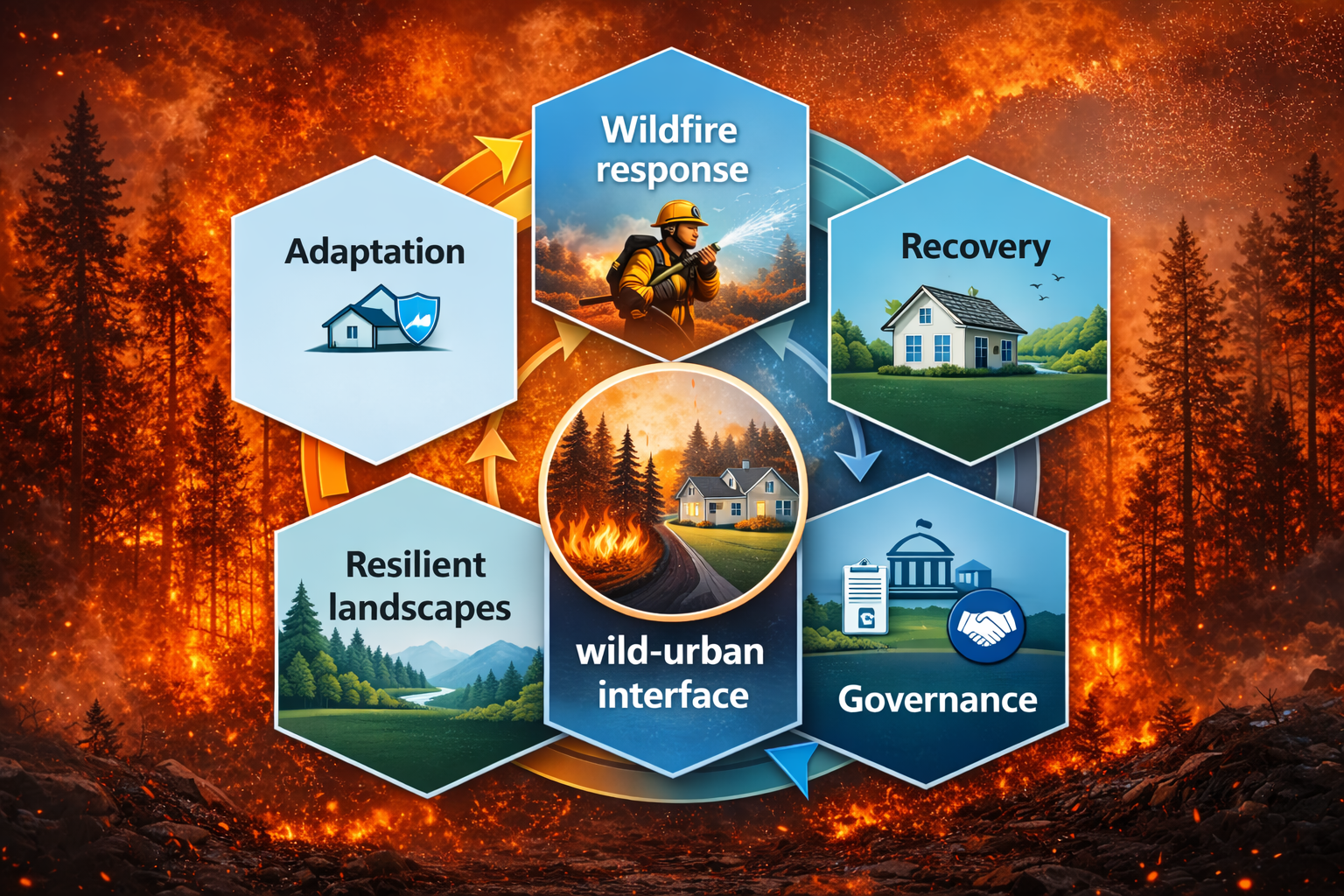
Wildfires and Wildland-Urban Interfaces (WUI)
Problem:
Despite the ecological benefits of wildfires, they have become a significant global concern due to their increasing intensity, size, and frequency, causing significant societal consequences. A notable example is the 2025 Los Angeles wildfire, which resulted in approximately 29 fatalities and more than 16.200 structures destroyed.
Wildfire problem derivates from interconnected factors, including climate change, inadequate land management, and human activities. Climate change intensifies meteorological, biological, and anthropogenic interactions, contributing to the complexity of Extreme wildfire events (EWEs). Additionally, inappropriate land use, such as planting flammable non-native species, and rural depopulation heighten wildfire risks.
This new wildfire regime is characterized by an unpredictable behavior. As a result, regions historically unaffected by wildfires, such as Northern Europe, are now experiencing more frequent events. Even in areas where such events commonly occur, are often unprepared to cope with the unexpected behavior and extent of the damage caused. In this context, traditional fire suppression and risk methods are proving insufficient, particularly when dealing with EWEs, which often beyond suppression capabilities. Therefore, it is urgent to reconsider the existing knowledge, policies, practices and tools applied in wildfire management to ensure they address the evolving complexity associated with EWEs.
Experts:
Projects:
INFERNO-RES
Infrastructure and Industrial Resilience to Wildfire, Fire and Blast with AI.
(Funded by TUD Safety & Security Institute).